Finding Your Superpower as an Activist

This essay accompanies Episode 3 of Rebecca's Third Act. [Watch the video here](link to YouTube video)

Are you struggling to find your role in responding to ongoing crises? For years, I felt that tension—wanting to contribute, showing up when I could, but never quite sure where I fit in the larger movement for change.

Then, during Trump's first term, I encountered a diagram that changed how I think about activism entirely.


The Diagram That Named My Work

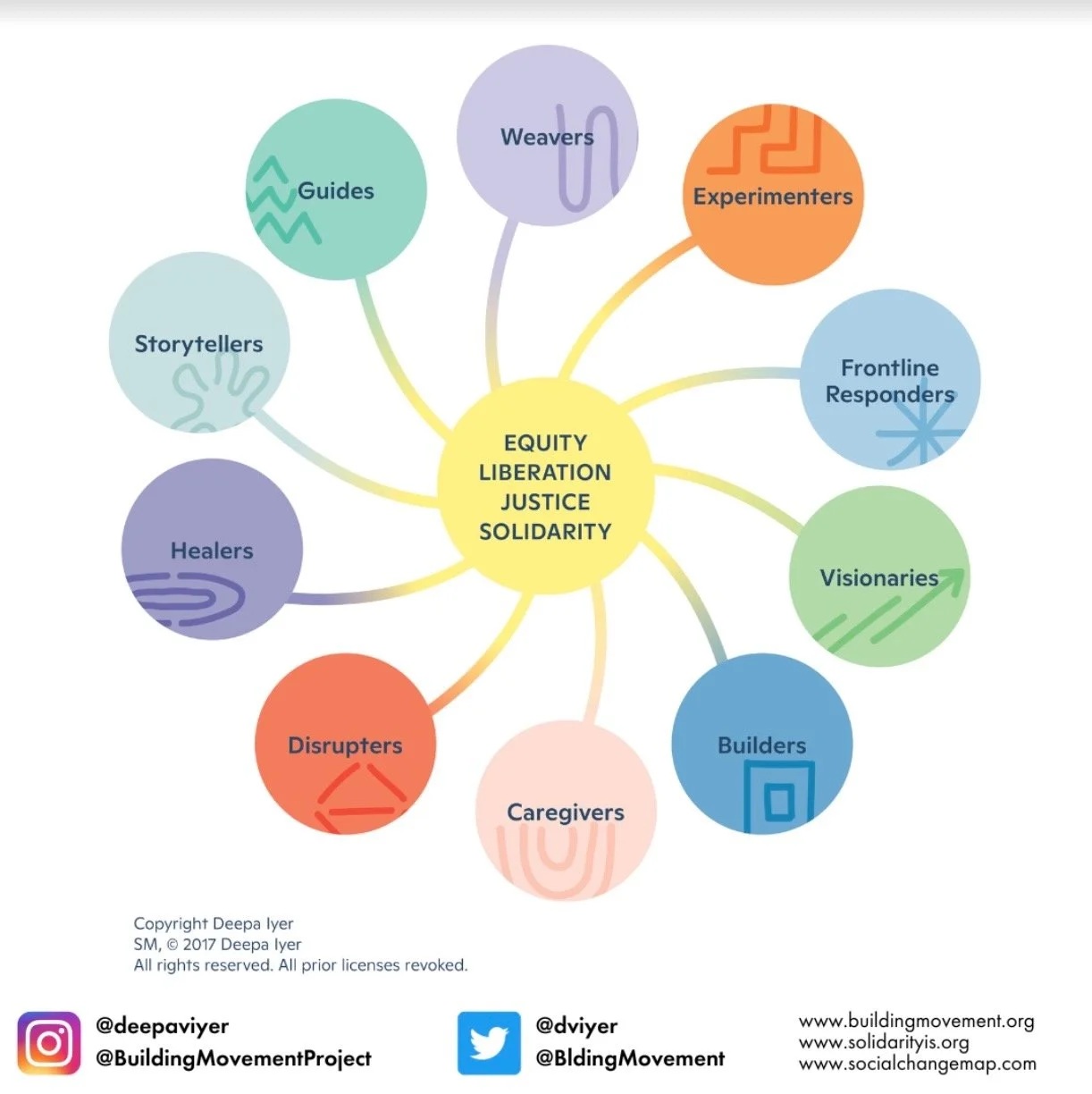
Deepa Viyer's social change ecosystem diagram maps out the various roles people play in movements for justice. Unlike the oversimplified binaries I'd seen before (organizer or follower, leader or supporter), this framework offered nuance. It showed me that movements need:

  • Weavers who build and sustain community

  • Frontline responders who meet immediate needs

  • Storytellers who shape narrative

  • Healers who tend to trauma and harm

  • Bridge builders who translate across difference

  • Experimenters who pilot new approaches

  • Guides who teach and mentor

When I saw "weaver" on that diagram—someone who connects people, builds coalitions, and creates the conditions for collective action—something clicked. That's me. That's what I've always done.

A Career of Weaving

Looking back, I can see the pattern clearly. Whenever I want to make something happen, I start by gathering the right people.

When I first moved to the Bay Area wanting to direct plays, my first move was to gather a group of artists and produce a show in the San Francisco Fringe Festival. After that show, we decided to start a theater company together. Crowded Fire Theater is still producing work almost 30 years later.

That's weaving: bringing people together to achieve things no single person could accomplish alone.

My biggest professional achievements have all been collective ones, goals that could only have been achieved by people working together.

Weaving in Response to Crisis

During Trump's first term, I started hosting a monthly political action group. We eventually merged with another Berkeley group, and together we've been meeting every month since early 2017. Over the years we’ve evolved a shared leadership structure, with six of us sharing responsibility for convening the group and selecting actions . We've taken local and national actions regularly, raised hundreds of thousands of dollars for Democratic candidates and grassroots voting organizations, and provided a safe starting place for many new activists.

This is how weaving works: bringing people together regularly to form community and take collective action. The power isn't in any single action we take—it's in the consistency, the relationships, the infrastructure of trust we've built over years.

The Scale of Weaving: From Neighborhood Chats to National Movements

Here's what I've learned about weaving: it doesn't require grand gestures or years of commitment. You can weave at any scale.

Early in Trump's second term, I decided my block needed a neighborhood group chat. Some neighbors I knew well; others had moved in recently and I'd never met. I went door to door collecting phone numbers and created a neighbor group chat.

That small act of weaving has created real community. We've helped someone find a lost dog, dealt with maintenance emergencies together, and alerted each other about ICE sightings in the area. We know each other's names now. We look out for each other.

Micro-activism counts. Starting a group chat, connecting two people who should know each other, hosting a regular gathering, forming a book club that tackles difficult topics—these are all acts of weaving. You don't need to organize a march or start a nonprofit. You just need to create space for people to come together.

Weaving as Women's Work

I love the weaver metaphor partly because weaving is traditionally women's work. There's power in claiming that history—the patient, skilled, essential labor of creating connection and structure. The work that holds communities together. The work that's often invisible and under-appreciated.

Weaving requires attention to detail that can feel mundane: checking in on people, making sure everyone knows each other's names, asking "should we meet again this month?", noticing who's been quiet lately. This emotional and logistical labor is often undervalued, dismissed as less important than the "real work" of organizing.

But without weavers, movements fall apart. Without people tending relationships, communities fragment. The flashy actions get attention, but sustainable change requires the steady work of connection.

Weaving Beyond Theater Spaces

As I've leaned into this role in my activism, I've started wondering how it connects to my artistic practice. Obviously, assembling a theater ensemble is a form of weaving. But I'm increasingly drawn to work that happens outside conventional theater spaces—work centered on the act of weaving strangers into community.

I'm developing a project called the Artists' Constitutional Convention. I don't know much about it yet, but I know it will invite artists to reimagine what a constitutional convention could be. And I know it will be participatory—both in its creation and its eventual presentation.

This feels like the natural evolution of my practice: using the tools of theater not to create performances for passive audiences, but to facilitate collective imagination and action.

Finding Your Own Role

Understanding that I'm a weaver has changed how I show up in both activism and art. It's helped me stop trying to do everything, recognize my limits, and appreciate where I'm most effective. It's also helped me value the work I do instead of dismissing it as "just" connecting people or "just" facilitating.

The Deepa Viyer diagram includes many other roles, and movements need all of them. We need frontline responders and healers. We need storytellers shaping narrative and guides teaching skills. We need experimenters piloting new approaches and bridge builders translating across difference.

The question isn't whether your role is important enough. The question is: which role allows you to contribute sustainably? Where do your skills and inclinations meet the movement's needs?
Sustainable Activism Requires Role Clarity

One reason people burn out in activism is trying to do everything. We think we should be at every protest, make every phone call, attend every meeting, donate to every cause. But sustainable engagement means finding your lane and staying in it—while trusting others to fill the roles you can't.

I'm not a frontline responder rushing to meet immediate crises. I'm not a healer tending to trauma (though I deeply value that work). I'm a weaver. I show up consistently, I connect people, I hold space for collective work. That's my contribution, and it's enough.

Knowing your role also helps you find your people—others who share your approach or who complement your skills. It helps you build the coalitions and collaborations that make movements work.

What's Your Role?

If you're trying to figure out where you fit in movements for change, I encourage you to explore the full social change ecosystem. [Link to Deepa Iyer's work if available]

Ask yourself:

  • What comes naturally to you?

  • What do people already come to you for?

  • What work feels sustainable rather than depleting?

  • Where do you see gaps that match your skills?

You don't need to force yourself into a role that doesn't fit. The movement needs you exactly as you are—doing the work only you can do, in the way only you can do it.

Weaving Forward

I'm still figuring out what it means to center weaving in my creative practice. How does understanding access, community, and collective action change how I make theater? What projects become possible when I lead with connection rather than performance?

These are the questions I'm sitting with as I plan this third act. If you're navigating similar territory—trying to align your creative work with your values, finding sustainable ways to contribute to change, or just figuring out where you fit—I'd love to hear from you.

What role do you play? What does weaving (or storytelling, or healing, or experimenting) look like in your life?

Let's keep the conversation going.

Rebecca's Third Act is a video and blog series documenting my midlife reboot—reimagining life, art, and purpose as a theater maker, parent, and activist navigating change. Subscribe to the YouTube channel and follow along as I figure out what's next.

Interested in support for your own third act? Learn about Third Act Lab, an 8-week coaching cohort starting in January.

Living and Creating with Chronic Illnes

This essay accompanies Episode 2 of Rebecca's Third Act. (link to YouTube video)

What happens when your body changes the rules on your creative practice? A little over a year ago, I was diagnosed with Ehlers-Danlos Syndrome, a chronic connective tissue disorder that has fundamentally shifted how I move through the world—and how I make art.

This isn't a hero's journey story where I fought valiantly and emerged triumphant. Chronic illness doesn't work that way. It's messy, unpredictable, and ongoing. But there's community, unexpected wisdom, and even beauty in learning to work with a body that has different rules than I thought.

The Long Road to Diagnosis

The path to my diagnosis began in earnest with long COVID in 2022. As for many people, COVID seemed to amplify symptoms I'd been living with—or ignoring—for years. What I'd considered normal turned out to be anything but.

It's not normal to be in pain every day. It's not normal for that pain to migrate unpredictably—knees one day, hips the next, back the day after. My physical therapist noticed the pattern: we'd fix one thing, and something else would immediately create a problem. She gently suggested there might be something underlying going on.

I also realized it wasn't normal to need to take to my bed for two or three days with crushing fatigue and no other discernible symptoms. Through research, online support, and conversations with others navigating similar experiences, I began to understand that I had hypermobility—and quite possibly Ehlers-Danlos Syndrome.

Eventually, I found my way to an expert who confirmed the diagnosis. Having a name for what was happening made a huge difference. Not because it fixed anything, but because it gave me a framework for understanding my body and making informed changes.

Incorporating Illness into Identity

The diagnosis was just the beginning. The harder work has been incorporating chronic illness into my identity. What does it mean to be a person with a chronic illness who tells stories for a living?

As a theater maker and writer, I swim in narrative structure all the time. I really wished my illness would follow that familiar arc: struggle, perseverance, triumph, healing. But chronic illness resists that shape. It's chronic. You can improve your baseline. You can also have everything get worse for no reason you can identify. It's far more random than any hero's journey.

Expanding my vision of what kind of story I'm living has been one of the most challenging aspects of this journey. I'm not moving through troubles into triumph. I'm learning to live inside uncertainty and variability, which requires a different kind of narrative imagination.

It's also meant absorbing new vocabulary: dynamic disability (some days much worse than others), invisible disability (often no outward signs of illness), spoon theory (tracking and allocating limited energy). I'm learning to navigate doctor's appointments two or three times a week, changing things carefully one variable at a time to understand what helps and what doesn't.

The Question of "Disabled Enough"

I find myself continually questioning whether I am really disabled enough to use that term. Am I disabled enough to call myself disabled?

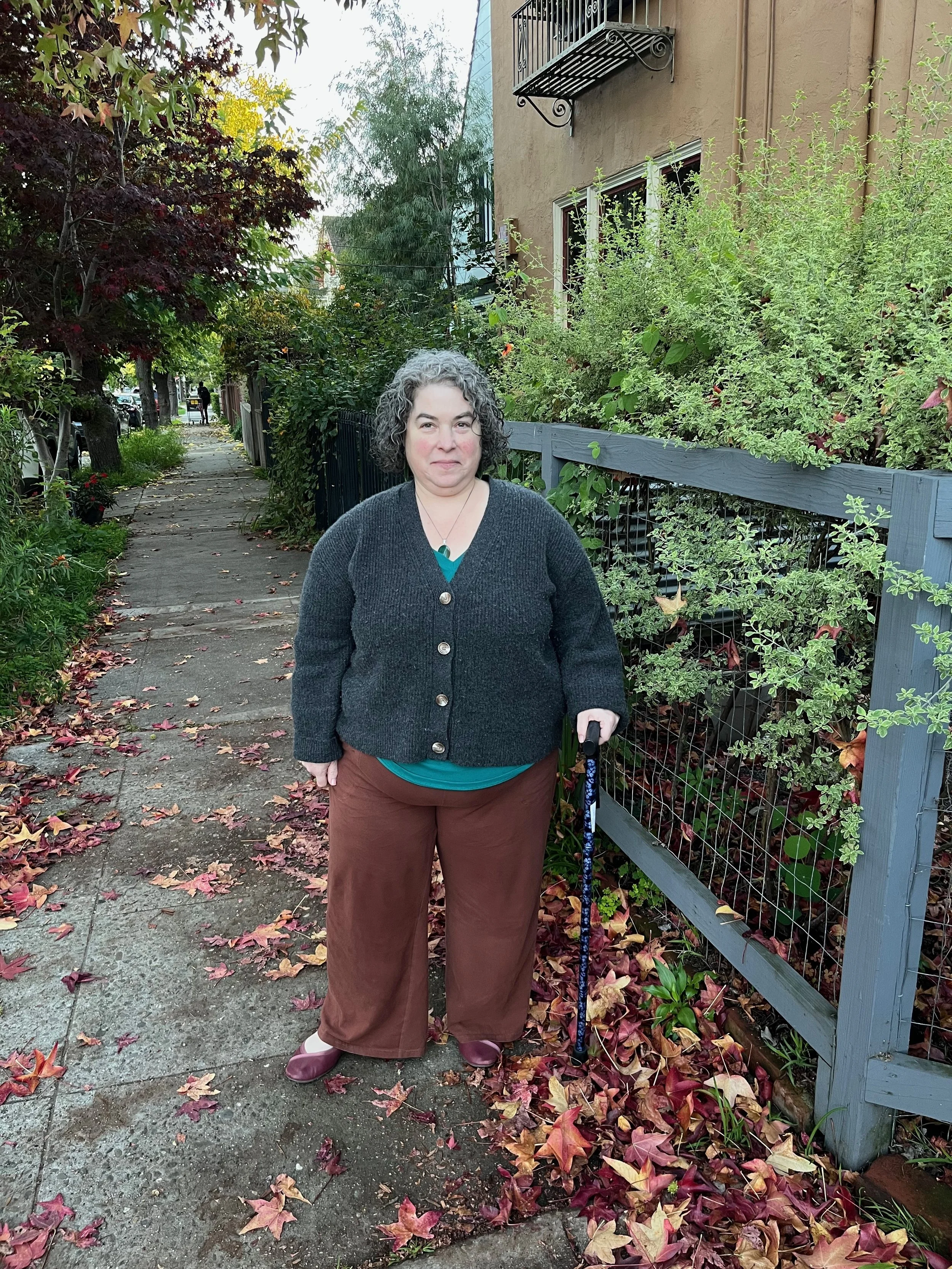
Last winter, on a trip to New Zealand, I started using a cane. It was a powerful and frightening moment—carrying this visible symbol of disability felt vultenrable. But it immediately made a difference. Stairs became easier. Uneven ground became manageable.

The cane also did something unexpected: it made my invisible disability visible. People offered seats. Venue staff directed me to accessible bathrooms and seating. "Oh, you shouldn't stand in line—sit here and we'll come get you." The practical accommodations were genuinely helpful.

But visibility came with complications. People assumed I was older than I am. They assumed I was sicker than I am. I'm still exploring when I want the cane and when I'm comfortable without it, navigating the complicated relationship between visibility, assumption, and access.

Learning My Real Limitations

Beyond the question of identity lies the practical work of understanding what I actually can and cannot do.

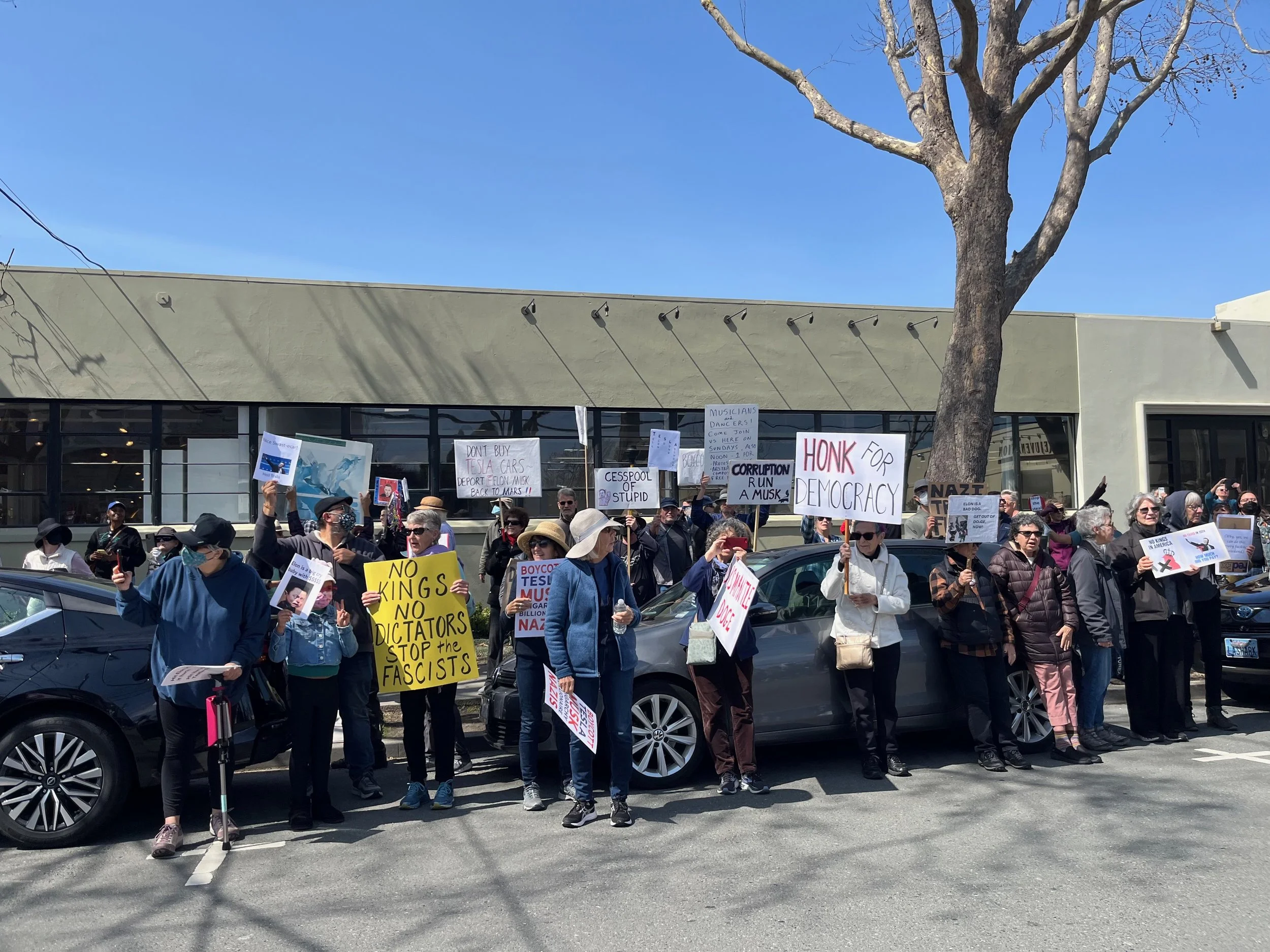
I struggle with activities that require alternating walking and standing—which makes protests particularly difficult. I’m sure you can all appreciate that this year it’s been very galling to have to sit out the growing protests and marches. I'm still looking for good solutions there.

Standing cocktail parties are essentially impossible; I'm learning to sit and let people come to me.

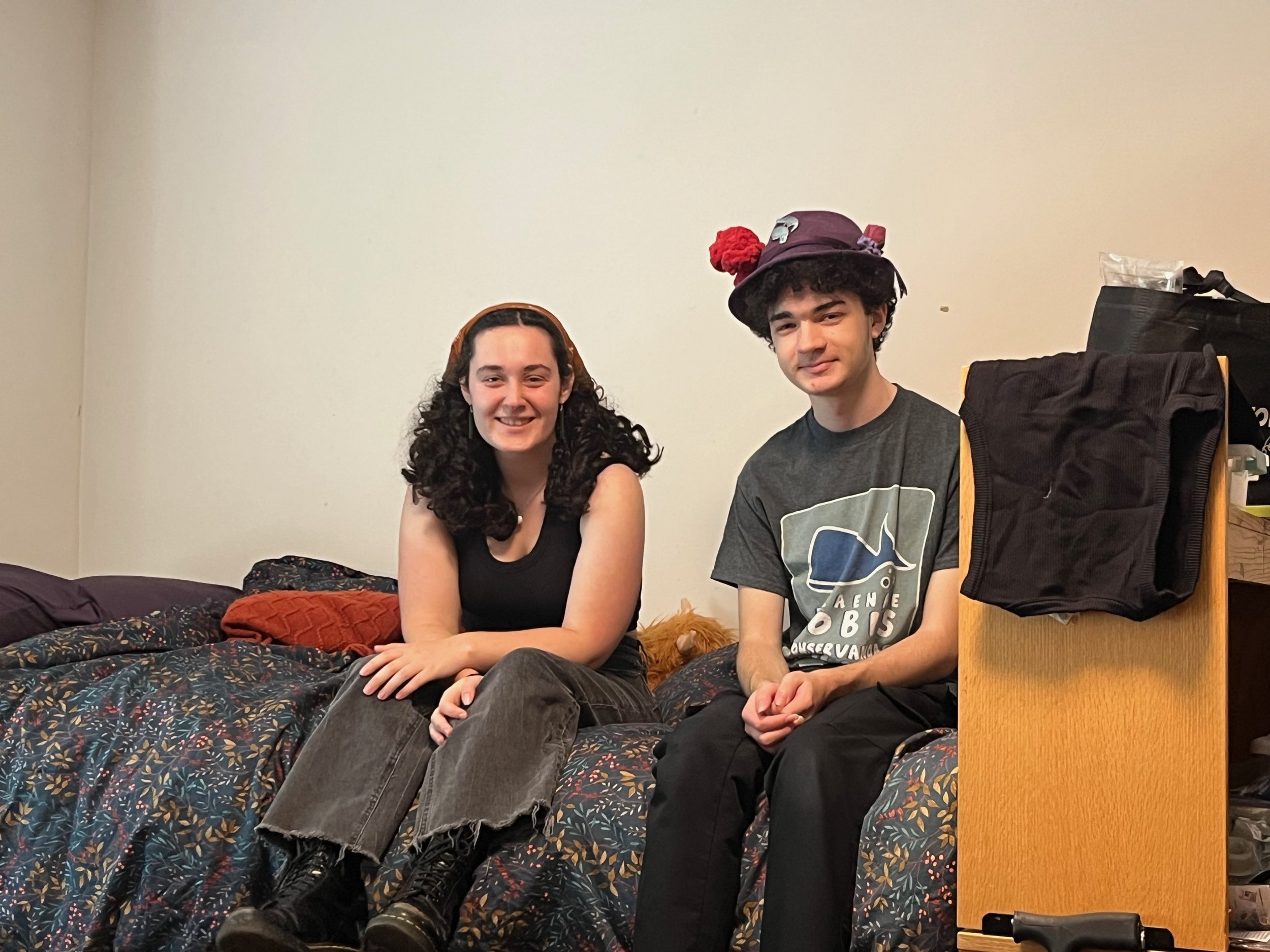
Some situations require careful advance planning. When we moved my daughter into her college dorm this summer, I knew I couldn't carry boxes up stairs or stand for extended periods. We strategized together, and she assigned me the role I could manage: deciding where everything should go. Having family support to work around my limitations is a privilege I don't take for granted.

As I get clearer about my capacities, I'm better able to conserve energy for what matters most. It's not about doing less across the board—it's about doing less of what depletes me so I have reserves for what's meaningful and necessary.

Finding Community and Vision

One unexpected gift of this identity shift has been finding community. I've connected with other people living with Ehlers-Danlos Syndrome both in person and online. The chronic illness community thrives online partly because it's a more accessible space for many of us who sometimes can't leave our beds. If you're navigating chronic illness, I encourage you to explore what community exists in digital spaces.

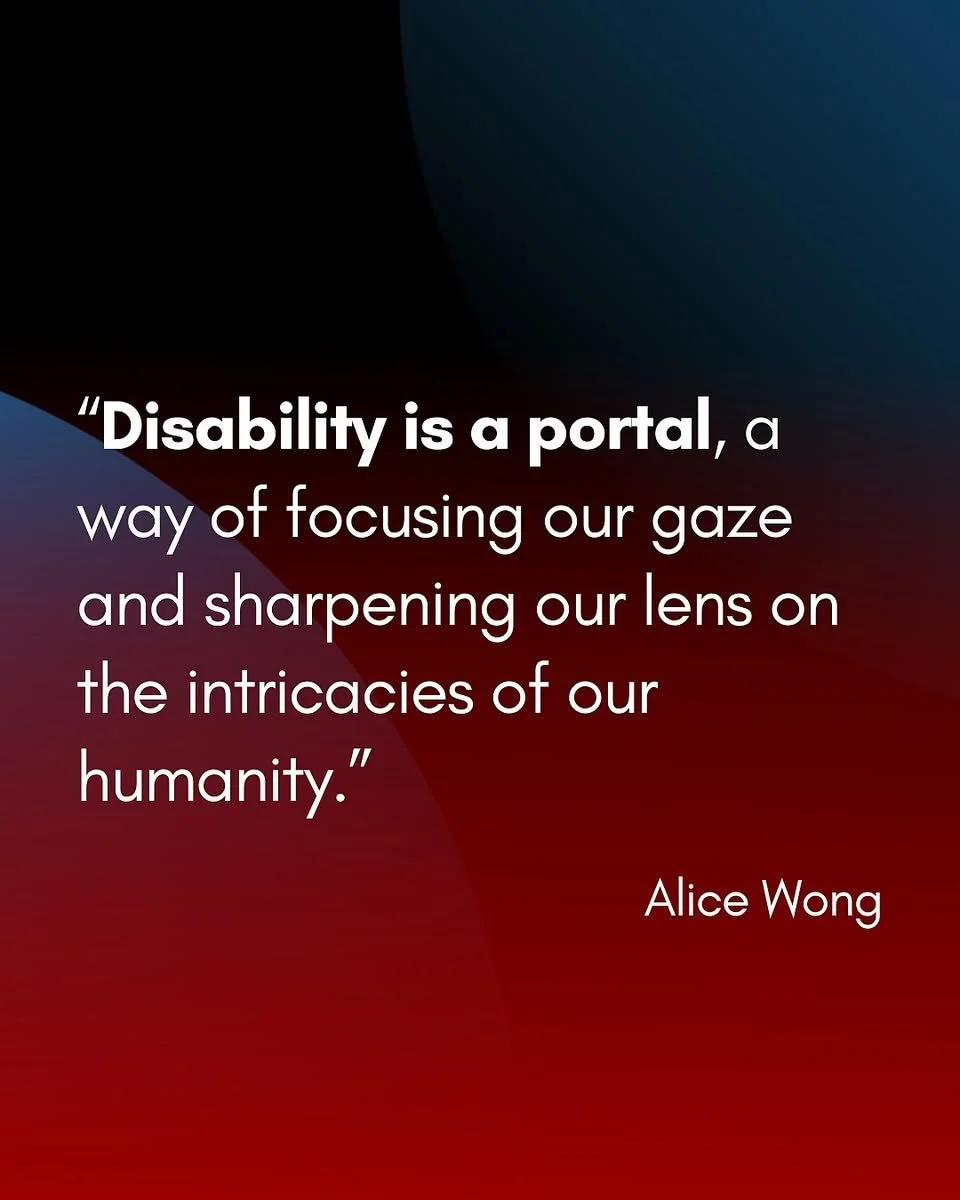
I've also been deeply moved by the vision of the disability justice movement: the understanding that there is genuine beauty and power in engaging with the world differently. Not in spite of disability, but because of it.

This lens has opened my awareness to neurodivergence as well—the ways people with different neurological experiences engage with the world. My family's recent ADHD diagnoses (my husband and both teenagers) have given me new perspective on how brains work differently and how most systems aren't designed for that diversity.

I'm still exploring what this disability lens will bring to my art-making. How does understanding access, pacing, and diverse embodiment change how I think about theater? What stories become visible when I look through this framework? What collaborative possibilities emerge?

Artist Spotlight: Honoring Alice Wong

I want to close by honoring Alice Wong, the pioneering disability justice activist and writer who left us last week. She was a powerful of someone who shared a vision that existed not in spite of her disability, but because of it. Her work—particularly the Disability Visibility Project—created space for disabled voices and perspectives that had long been marginalized.

Alice modeled what it looks like to center disabled experience, to refuse inspiration porn narratives, and to build community and culture from a place of disability pride. Her loss is profound, and her legacy will continue shaping how we understand disability, access, and justice.

Resources for Managing Chronic Illness

If you're navigating chronic illness alongside creative work, I've compiled a free guide: Tools for Managing Chronic Illness. It includes products that help me manage unpredictable energy and pain, pacing strategies, and resources for understanding your diagnosis. Download it here.

Some tools I mention in the video and guide:

  • Visible app: Helps track activity and energy to understand your limits

  • Spoon theory: A framework for thinking about limited energy

  • Mobility aids: Canes, braces, and supports that expand what's possible

  • Online communities: Spaces to connect with others managing similar conditions

What's Next

Living with chronic illness means accepting that some questions don't have neat answers. Am I disabled enough? What story am I inside? How will this shape my art?

I'm sitting with those questions rather than rushing to resolve them. What I know is that my body has changed the rules, and I'm learning to work with those changes rather than against them.

If you're navigating similar territory—chronic illness, disability, or simply the reality that bodies change and age—I'd love to hear from you. What discoveries have you made about identity, creativity, and limitation? What communities have supported you? What questions are you sitting with?

Let's keep the conversation going. Because one thing I've learned: we're not alone in this, even when it feels that way.

Rebecca's Third Act is a video and blog series documenting my midlife reboot—reimagining life, art, and purpose as a theater maker, parent, and writer navigating chronic illness and change. Subscribe to the YouTube channel and follow along as I figure out what's next.

Creating Through Crisis

If you’re finding it hard to sustain a creative practice

amid cascading crises, you’re not alone. One of my ongoing challenges is making time for art when so much else feels urgent. With new headlines every day and the gravitational pull of doomscrolling, it’s easy to let practice slip.

Whether you are a professional artist, a committed hobbyist, or someone who turns to art for restoration, here are practical ways to keep making during turbulent times. This essay is part of Rebecca’s Third Act, a series documenting my midlife reboot—parenting, career, theatermaking, and my own body are all in motion. I hope these practices offer steadiness and space to imagine what comes next.

As a theater director, writer, and long‑time experimenter across forms, I’ve learned what genuinely supports creativity in difficult periods—and what does not.

What We're NOT Going to Do

A quick note on what we’re not doing. We’re not prescribing daily quotas or “don’t break the chain” rules. That approach has rarely worked for me and is unrealistic for many people navigating caregiving, day jobs, and the current news cycle.

I’ve fallen into all‑or‑nothing thinking more times than I can count and have too often chosen “never” when I couldn’t choose “every day.” Instead, let’s explore small, sustainable practices you can carry even when our civic life feels precarious. As a bonus, they help you stay grounded, remember you have a body, and live in the world—not only inside a screen.

Black and white image of a man facing an approaching giant wave. Photo by Kammeran Gonzalez-Keola.

Understanding Our Polycrisis Moment

We are living through a polycrisis: overlapping crises unfolding at once. That reality is unlikely to recede soon, so strengthening our capacity to make art amid disruption matters.

Creativity is one way we imagine better worlds. The challenges we face—climate change, political upheaval, economic uncertainty, and social division—require creative responses. But how do we keep our creative muscles strong when the news cycle is relentless?

The answer isn’t to retreat from creativity; it’s to find ways of practicing that fit the present moment rather than fight it.

Four Sustainable Creative Practices for Crisis Times

1. Grounding: Connecting to Your Body and Earth

Anything that deepens connection to your body and to the earth counts as creative practice—and it’s the most reliable way I know to slow down, breathe, and step off the news treadmill.

My favorite grounding practice is to go into the backyard early and place my feet on the ground, barefoot if it’s not too cold. Even a few breaths make a difference. Morning sunlight also supports healthy cortisol rhythms, so this practice does double duty.

If getting outside isn’t possible, lie down on the floor and feel the earth beneath you, even through the building. Notice your weight being supported. Or try pressing your palms gently over your eyes and take five slow breaths; the light pressure can help activate your parasympathetic nervous system.

The beauty of grounding is that it requires no materials, no special skills, and very little time. Whether you have two minutes or twenty, it reminds your nervous system that you are safe in this moment, creating space for creativity to flow.

2. Noodling: Playing Without Goals

This practice takes one element of your medium—or one you want to explore—and lets you play with it without goals or judgment.

Some people prefer a touch of structure: writers might list words from A to Z; poets might draft a quick haiku about what they see outside; dancers might repeat a short phrase; musicians might improvise on a simple progression.

For me as a theater director, I sometimes stand or sit in different positions and notice how the room’s energy shifts with orientation. Facing a corner, turning to center, lying on the floor—each position produces a different feeling, and I simply observe what emerges without trying to make it “useful.”

The point is to stay in relationship with your medium without the pressure to produce. Think of it as a relaxed conversation with a longtime friend—easy, familiar, and still surprising.

3. Do Something You're Bad At

A favorite practice: make something in a medium where you have no training. When your primary form carries high expectations, expertise can become a burden; you instantly feel the gap between intention and result.

In an unfamiliar medium, expectations drop. For me, that’s visual art. I’ll make a quick watercolor or even use a coloring book. Accepting that the result will be unpolished frees me to enjoy the making.

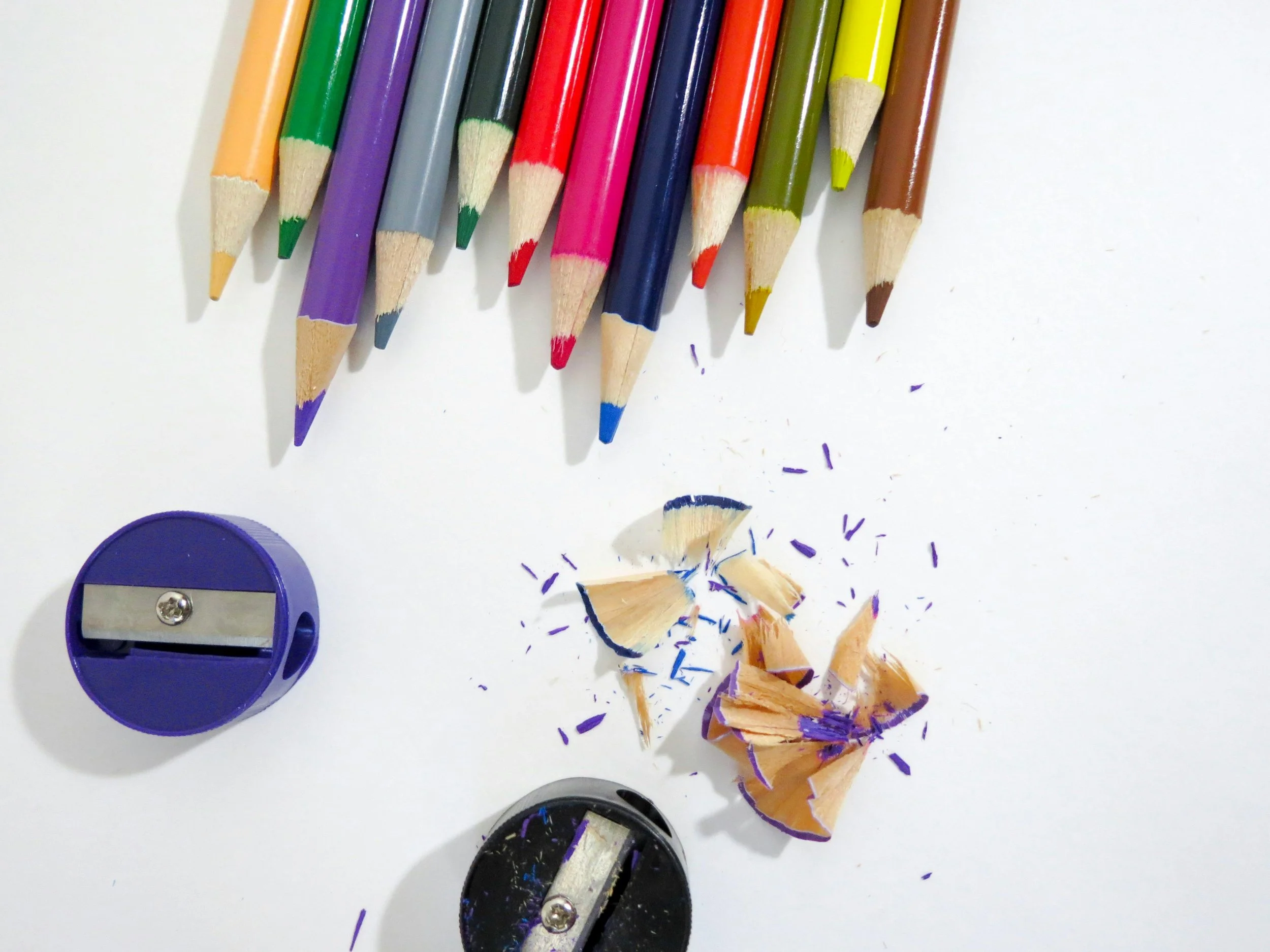
An array of colored pencils, a purple pencil sharpener, and pencil shavings. Photo by Miesha Renae Maiden.

For you, it may be the reverse: a visual artist tries a poem; a musician plays with clay. The medium doesn’t matter. What matters is choosing a space where judgment is quiet because you never expected mastery.

This practice interrupts perfectionism. When everything feels high‑stakes, a low‑stakes outlet helps you maintain your relationship with making.

4. Notice Yourself Noticing

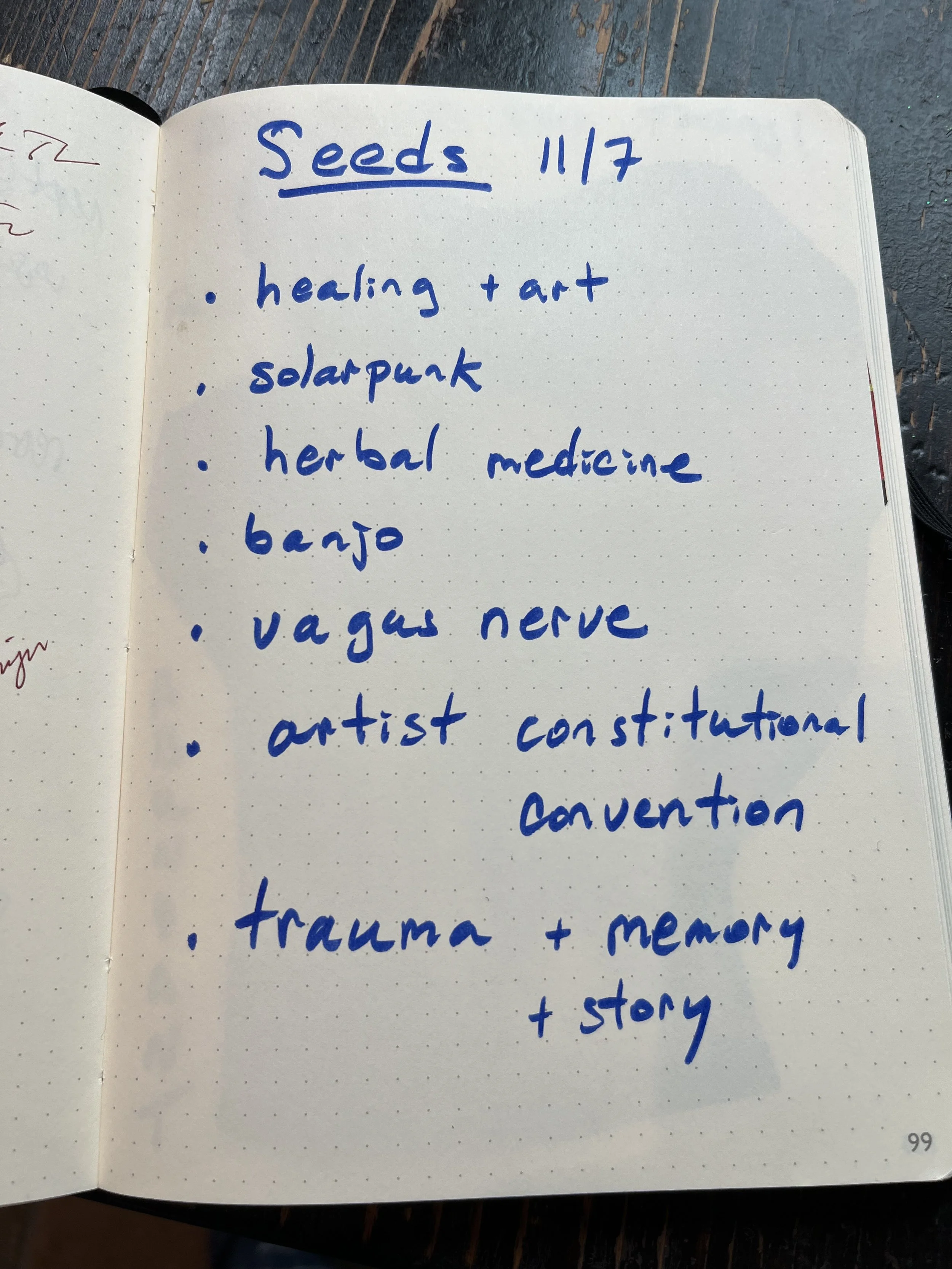
A practice I call “Seeds”: every Friday I write a list of ideas, images, and projects that are holding my attention. I don’t look at last week’s list until I finish this week’s; then I scan for patterns.

For example, if “drumming” appears three weeks in a row, I take note. There’s no pressure to act immediately. I simply offer a bit more attention to that theme over the next couple of weeks.

Instead of scrolling, I might watch a short video on rhythm, tap patterns on my desk, or listen to percussion‑forward music. I’m not committing to lessons; I’m acknowledging that rhythm is speaking to me right now.

Open journal with blue text showing a list of "seeds"

This works because it lets you notice what wants to emerge without demanding immediate action. Sometimes these seeds grow into major projects; other times they add texture to daily life. Both outcomes are valuable.

Starting Small in Big Times

The goal is not to solve every creative challenge or suddenly become maximally productive. These are demanding times, and survival itself is creative work. If you manage one practice this week, that’s enough. If some weeks you manage none, that’s okay.

What we’re building is resilience: a steady connection to creativity even when the world feels uncertain. We need people who can imagine different ways of being, different solutions, and different stories about what’s possible.

By keeping your practice alive in whatever small way you can, you care for yourself—and you maintain the capacity to contribute to the larger work of imagining and building better futures.

Artist Spotlight

Katrina Rodabaugh is an artist, author, and educator known for her work in slow fashion, visible mending, and sustainable textiles. She’s an old friend and I’ve loved watching her practice evolve over years. Last year I took her creative process class, which offered a clear, kind framework for moving ideas from spark to steady practice. Her teaching centers process, attention, and values‑aligned making. Highlights included weekly prompts that emphasized noticing over output, gentle accountability through reflective check‑ins, and practical strategies for re‑entering a project after interruption. Her approach pairs rigor with generosity—exactly the combination many of us need in a polycrisis.

Explore her work and offerings at katrinarodabaugh.com.

Your Next Steps

I invite you to try one or more of these practices this week. Start small: five minutes of grounding, or a brief noodling session with whatever materials are nearby. Notice how it feels to prioritize creativity, even in a modest way, in intense times.

Remember: the goal isn’t perfection or productivity. It’s staying connected to the part of you that makes, plays, and imagines. That part of you is needed now.

What creative practice will you try first? I’d love to hear how these approaches work for you and what you discover along the way.

Rebecca's Third Act: Reimagining Life, Art, and Purpose in Midlife

Hello, and welcome to what feels like both a beginning and a continuation.

I'm Rebecca, and if you've found your way here, chances are you're navigating some version of what I've been calling the "third act", that rich, complex, sometimes bewildering phase of life that doesn't quite fit the scripts we were handed in our younger years.

Maybe you're here because you caught wind of my new YouTube series, also called "Rebecca's Third Act," where I'll be documenting this journey in real time. Maybe you stumbled across my theater work or consulting practice. Or maybe you're simply someone who, like me, has reached a point where the old definitions of success, creativity, and purpose feel too small for the person you're becoming.

Whatever brought you here, I'm grateful you're joining me for what promises to be an honest, messy, and hopefully illuminating exploration of what it means to reimagine our lives when we're no longer who we used to be, but not yet sure who we're becoming.

Why Start This Now?

The truth is, I feel like the ground is shifting under my feet.  My oldest kid just left for college, I'm dealing with a newly diagnosed chronic illness, not to mention our field, and the country, seem to be in a state of accelerating collapse. It feels like time for a major midlife reboot. I'm wondering what kind of artist I want to be in these apocalyptic times, what kind of person I am as the nature of parenting shifts, and how to stay balanced and creative while the world is on fire. 

If you're wondering those things too, I hope you'll follow along with weekly posts here and weekly videos over on my new YouTube channel

The more I've talked with friends, colleagues, and strangers about these themes, the more I realized we're all grappling with versions of the same questions: How do we stay creative when inspiration feels elusive? How do we find meaning when traditional markers of success feel hollow? How do we build community when so many of our old connections no longer serve us?

This blog is my attempt to explore these questions together, in real time, without the pressure of having all the answers.

What You Can Expect Here

Think of this space as the behind-the-scenes companion to the video series, a place where I can dig deeper into the themes that emerge, share the stories that don't make it into the episodes, and create room for the kind of nuanced conversation that's hard to fit into a ten-minute video.

You'll find reflections on the creative process, particularly what it's like to make art during uncertain times. I'll share insights from my consulting work with arts organizations, many of whom are also navigating their own third acts as they adapt to post-pandemic realities and changing community needs.

There will be community spotlights featuring other artists, activists, and thinkers who are reimagining their own third acts in inspiring ways. I'm particularly interested in highlighting people who are breaking conventional timelines, starting new careers at sixty, returning to abandoned dreams, or discovering entirely new passions in midlife.

I'll also use this space to process what I'm learning about myself and this life stage. Expect honest accounts of the days when nothing feels possible alongside celebrations of unexpected breakthroughs. This isn't a self-help blog or a prescription for how to "do" midlife correctly. It's more like a field journal from someone who's actively exploring unmapped territory.

And because I believe deeply in the power of shared storytelling, every post will end with an invitation for you to share your own experiences. Whether through comments, emails, or eventual guest posts, I want this to become a genuine conversation rather than a one-way broadcast.

Building Community in the In-Between

One of the unexpected challenges of this life stage is the isolation that can come with not fitting neatly into existing categories. We're not quite empty nesters but we're also not new parents. We're experienced professionals but we might be questioning everything we thought we knew about our careers. We have more freedom than we've had in decades, but also more awareness of our own mortality.

Traditional communities, often organized around work, parenting, or other life circumstances, don't always know what to do with people in transition. And yet this is exactly when we most need connection, reflection, and support.

That's part of what I'm hoping to build here: a community for people navigating their own third acts, whatever that means for them. A place where we can acknowledge both the privileges and challenges of this life stage, share resources and insights, and remind each other that we don't have to figure it all out alone.

What's Coming Next

In my next post, I'll be diving deep into something I'm calling "Creating Through Crisis", exploring how we maintain our creative practices and find inspiration when the world feels overwhelming. It's a theme that's come up repeatedly in my conversations with other artists, and one that feels particularly relevant as we navigate ongoing global uncertainty.

I'll share some of what I've learned about maintaining creative discipline without rigid expectations, finding inspiration in unexpected places, and using art-making as both refuge and resistance. Plus, I'll introduce you to a few artists who are doing extraordinary work precisely because they're willing to create in the midst of difficulty.

Your Turn

But first, I'd love to hear from you. What brought you to this post? What questions are you grappling with in your own life right now? Are there particular aspects of midlife creativity, career transition, or purpose-seeking that you'd like to see explored here?

The comment section below is yours, use it to introduce yourself, share a reflection, or simply say hello. And if you're not quite ready to comment publicly, you can always reach out directly through my contact page.

One of the things I'm learning about third acts is that they're inherently collaborative. Unlike the first act (where we're often focused on establishing ourselves) or the second act (where we're building and achieving), the third act seems to invite more partnership, more mentorship in both directions, more recognition that we're all figuring it out together.

So let's figure it out together. Subscribe for updates, share your stories, and let's see what kind of community we can build around the beautiful, messy, creative work of reimagining our lives.

Welcome to the third act. I'm so glad you're here.

Ready to dive deeper? Subscribe to get notified when "Creating Through Crisis" goes live this week, and follow along with the YouTube series for weekly video updates on this ongoing journey.

Tell me: What does "third act" mean to you right now? What questions are you carrying as you navigate this season of life? Share your thoughts in the comments below: I read and respond to every one.